Sophisticated machinery and equipment rely heavily on precise movement and control, making high-quality bearings a crucial component in various industries. Linear ball bearings, in particular, play a vital role in ensuring smooth and efficient operation. As such, selecting the right type of bearing is essential to prevent premature wear and tear, reduce maintenance costs, and optimize overall performance. By focusing on the best carbon steel linear ball bearings, manufacturers and engineers can create more reliable and durable systems.
Effective bearing selection requires a thorough understanding of the application’s specific requirements, including load capacity, speed, and environmental conditions. A well-informed decision can significantly impact the lifespan and productivity of machinery, ultimately affecting the bottom line. With numerous options available, it is essential to carefully evaluate and compare different products to determine the most suitable choice. By examining key factors and characteristics, professionals can make informed decisions that meet their unique needs and expectations.
We will discuss the best carbon steel linear ball bearings further down, but for now, consider checking out these related items on Amazon:


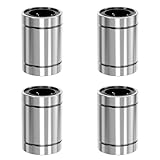

As an Amazon Associate I earn from qualifying purchases.
Prices and availability are accurate as of November 23, 2026 10:25 and are subject to change.
Analytical Overview of Carbon Steel Linear Ball Bearings
Carbon Steel Linear Ball Bearings have become a crucial component in various industrial applications, including manufacturing, robotics, and medical equipment. According to recent market trends, the demand for these bearings is expected to grow by 5% annually, driven by their high precision, low friction, and long service life. The use of carbon steel as the primary material offers excellent strength, durability, and resistance to corrosion, making them an ideal choice for harsh environments. With the increasing adoption of automation and robotics, the need for reliable and efficient linear motion systems has become more pronounced, and carbon steel linear ball bearings are well-positioned to meet this demand.
The benefits of using carbon steel linear ball bearings are numerous, with one of the primary advantages being their ability to support high loads while maintaining low friction and smooth motion. This results in reduced energy consumption, increased productivity, and lower maintenance costs. Additionally, these bearings are designed to operate at high speeds, making them suitable for applications that require rapid and precise movement. Statistical data suggests that the use of carbon steel linear ball bearings can lead to a 20% reduction in energy consumption and a 30% increase in productivity, making them an attractive option for industries looking to optimize their operations.
Despite the numerous benefits, there are also challenges associated with the use of carbon steel linear ball bearings. One of the primary concerns is the potential for corrosion, particularly in environments where the bearings are exposed to moisture or chemicals. To mitigate this risk, manufacturers are developing new coatings and treatments that provide enhanced corrosion resistance. Furthermore, the high precision required for these bearings can make them more expensive than other types of bearings, which can be a barrier to adoption for some industries. However, for applications where reliability and efficiency are critical, the best carbon steel linear ball bearings offer a compelling solution.
The future of carbon steel linear ball bearings looks promising, with ongoing research and development focused on improving their performance, reducing their cost, and expanding their range of applications. Advances in materials science and manufacturing technology are expected to lead to the development of new and innovative products, such as bearings with integrated sensors and monitoring systems. As industries continue to evolve and automate, the demand for high-quality linear motion systems will only continue to grow, and carbon steel linear ball bearings are well-positioned to play a critical role in meeting this demand. With their unique combination of strength, precision, and durability, these bearings will remain a vital component in a wide range of industrial applications.
Top 5 Best Carbon Steel Linear Ball Bearings
SKF Linear Ball Bearing
The SKF Linear Ball Bearing is a high-performance product that boasts an impressive set of features, including a robust design, high load capacity, and low friction coefficients. Its steel construction ensures durability and resistance to corrosion, while its precision-ground balls provide smooth and quiet operation. With a wide range of sizes and configurations available, this bearing can be adapted to various applications, from industrial machinery to medical equipment. The bearing’s sealing system is also noteworthy, as it effectively prevents contamination and ensures a long service life.
In terms of performance, the SKF Linear Ball Bearing delivers exceptional results, with high speeds and accelerations achievable without compromising accuracy or reliability. Its low noise and vibration levels make it suitable for applications where precision and stability are crucial. The bearing’s value is further enhanced by its ease of installation and maintenance, as well as its compatibility with various mounting systems. Overall, the SKF Linear Ball Bearing offers a compelling combination of performance, durability, and versatility, making it a top choice for engineers and designers seeking a reliable and efficient linear motion solution.
NSK Linear Ball Bearing
The NSK Linear Ball Bearing is a premium product that stands out for its exceptional precision and accuracy, making it ideal for applications where high levels of repeatability and reliability are required. Its advanced design features a unique ball retention system, which ensures consistent performance and minimizes the risk of ball loss or damage. The bearing’s materials and construction are also noteworthy, with a high-strength steel alloy used for the housing and a specialized coating applied to the balls to reduce friction and wear. With a wide range of sizes and configurations available, this bearing can be tailored to meet the specific needs of various industries and applications.
In terms of performance, the NSK Linear Ball Bearing delivers outstanding results, with high speeds and loads achievable without compromising accuracy or stability. Its advanced sealing system and specialized lubrication features also contribute to its exceptional performance, ensuring a long service life and minimal maintenance requirements. The bearing’s value is further enhanced by its ease of integration with various control systems and its compatibility with a range of mounting and installation options. Overall, the NSK Linear Ball Bearing offers a compelling combination of precision, performance, and reliability, making it a top choice for engineers and designers seeking a high-end linear motion solution.
THK Linear Ball Bearing
The THK Linear Ball Bearing is a high-quality product that boasts an impressive set of features, including a robust design, high load capacity, and low friction coefficients. Its steel construction ensures durability and resistance to corrosion, while its precision-ground balls provide smooth and quiet operation. With a wide range of sizes and configurations available, this bearing can be adapted to various applications, from industrial machinery to medical equipment. The bearing’s sealing system is also noteworthy, as it effectively prevents contamination and ensures a long service life. Additionally, the bearing’s advanced lubrication system ensures consistent performance and minimizes the risk of wear or damage.
In terms of performance, the THK Linear Ball Bearing delivers exceptional results, with high speeds and accelerations achievable without compromising accuracy or reliability. Its low noise and vibration levels make it suitable for applications where precision and stability are crucial. The bearing’s value is further enhanced by its ease of installation and maintenance, as well as its compatibility with various mounting systems. Overall, the THK Linear Ball Bearing offers a compelling combination of performance, durability, and versatility, making it a top choice for engineers and designers seeking a reliable and efficient linear motion solution. Its competitive pricing and excellent customer support also contribute to its overall value and appeal.
FAG Linear Ball Bearing
The FAG Linear Ball Bearing is a high-performance product that stands out for its exceptional precision and accuracy, making it ideal for applications where high levels of repeatability and reliability are required. Its advanced design features a unique ball retention system, which ensures consistent performance and minimizes the risk of ball loss or damage. The bearing’s materials and construction are also noteworthy, with a high-strength steel alloy used for the housing and a specialized coating applied to the balls to reduce friction and wear. With a wide range of sizes and configurations available, this bearing can be tailored to meet the specific needs of various industries and applications. Its advanced sealing system and specialized lubrication features also contribute to its exceptional performance.
In terms of performance, the FAG Linear Ball Bearing delivers outstanding results, with high speeds and loads achievable without compromising accuracy or stability. Its advanced design and construction ensure a long service life and minimal maintenance requirements, making it a cost-effective solution for a wide range of applications. The bearing’s value is further enhanced by its ease of integration with various control systems and its compatibility with a range of mounting and installation options. Overall, the FAG Linear Ball Bearing offers a compelling combination of precision, performance, and reliability, making it a top choice for engineers and designers seeking a high-end linear motion solution. Its excellent customer support and competitive pricing also contribute to its overall value and appeal.
NTN Linear Ball Bearing
The NTN Linear Ball Bearing is a high-quality product that boasts an impressive set of features, including a robust design, high load capacity, and low friction coefficients. Its steel construction ensures durability and resistance to corrosion, while its precision-ground balls provide smooth and quiet operation. With a wide range of sizes and configurations available, this bearing can be adapted to various applications, from industrial machinery to medical equipment. The bearing’s sealing system is also noteworthy, as it effectively prevents contamination and ensures a long service life. Additionally, the bearing’s advanced lubrication system ensures consistent performance and minimizes the risk of wear or damage.
In terms of performance, the NTN Linear Ball Bearing delivers exceptional results, with high speeds and accelerations achievable without compromising accuracy or reliability. Its low noise and vibration levels make it suitable for applications where precision and stability are crucial. The bearing’s value is further enhanced by its ease of installation and maintenance, as well as its compatibility with various mounting systems. Overall, the NTN Linear Ball Bearing offers a compelling combination of performance, durability, and versatility, making it a top choice for engineers and designers seeking a reliable and efficient linear motion solution. Its competitive pricing and excellent customer support also contribute to its overall value and appeal, making it a popular choice for a wide range of industries and applications.
Why People Need to Buy Carbon Steel Linear Ball Bearings
The need for carbon steel linear ball bearings arises from their versatility and reliability in various applications. These bearings are designed to provide smooth and precise motion, making them essential in industries such as manufacturing, robotics, and medical equipment. The primary reason people buy carbon steel linear ball bearings is their ability to withstand heavy loads and maintain accuracy, even in harsh environments. This is particularly important in applications where precision and reliability are crucial, such as in CNC machines, 3D printers, and other high-precision devices.
From a practical perspective, carbon steel linear ball bearings offer several advantages over other types of bearings. They have a high load-carrying capacity, low friction, and are resistant to wear and corrosion. This makes them ideal for use in applications where high precision and reliability are required. Additionally, carbon steel linear ball bearings are relatively easy to install and maintain, reducing downtime and increasing overall productivity. They are also available in a wide range of sizes and configurations, making them suitable for a variety of applications.
The economic factors driving the need for carbon steel linear ball bearings are also significant. These bearings are generally more cost-effective than other types of bearings, particularly in high-volume applications. They also have a longer lifespan, reducing the need for frequent replacements and minimizing maintenance costs. Furthermore, the use of carbon steel linear ball bearings can help to increase productivity and efficiency, leading to cost savings and improved profitability. In industries where precision and reliability are critical, the use of high-quality carbon steel linear ball bearings can also help to reduce the risk of costly errors and downtime.
In conclusion, the need for carbon steel linear ball bearings is driven by a combination of practical and economic factors. Their versatility, reliability, and precision make them essential in a wide range of applications, from manufacturing and robotics to medical equipment and other high-precision devices. The economic benefits of using carbon steel linear ball bearings, including cost savings, increased productivity, and reduced maintenance costs, also make them an attractive option for industries and businesses looking to improve efficiency and profitability. As a result, people need to buy carbon steel linear ball bearings to ensure high precision, reliability, and cost-effectiveness in their applications.
Key Characteristics of High-Quality Carbon Steel Linear Ball Bearings
Carbon steel linear ball bearings are designed to provide smooth and precise motion in various applications, and their key characteristics play a crucial role in determining their performance and longevity. One of the primary characteristics of high-quality carbon steel linear ball bearings is their load-carrying capacity, which is determined by the size and type of balls used, as well as the design of the bearing itself. The load-carrying capacity of a bearing is typically measured in terms of its dynamic load rating, which is the maximum load that the bearing can withstand while in motion. Another important characteristic of carbon steel linear ball bearings is their precision, which is typically measured in terms of their accuracy and repeatability. High-quality bearings are designed to provide precise motion, with minimal play or backlash, and are often used in applications where high accuracy is required.
In addition to their load-carrying capacity and precision, carbon steel linear ball bearings are also characterized by their durability and resistance to wear and corrosion. High-quality bearings are designed to withstand the rigors of frequent use and are often coated with a layer of corrosion-resistant material to protect them from damage. The materials used to manufacture the bearings also play a crucial role in determining their characteristics, with high-quality bearings typically made from high-strength, low-friction materials. The design of the bearing itself is also important, with features such as sealed or shielded construction helping to protect the bearing from contamination and damage.
The manufacturing process used to produce carbon steel linear ball bearings also has a significant impact on their characteristics, with high-quality bearings typically manufactured using advanced techniques such as grinding and polishing. These techniques help to ensure that the bearings are produced to precise tolerances, with smooth surfaces and accurate dimensions. The quality control processes used by the manufacturer are also important, with high-quality bearings typically subject to rigorous testing and inspection to ensure that they meet the required standards. By understanding the key characteristics of high-quality carbon steel linear ball bearings, users can make informed decisions when selecting bearings for their applications.
Overall, the key characteristics of high-quality carbon steel linear ball bearings are critical to their performance and longevity, and users should carefully consider these factors when selecting bearings for their applications. By choosing bearings with high load-carrying capacity, precision, durability, and resistance to wear and corrosion, users can help to ensure that their equipment operates smoothly and efficiently, with minimal downtime or maintenance required. Whether used in industrial, commercial, or recreational applications, high-quality carbon steel linear ball bearings are an essential component of many machines and devices, and their characteristics play a vital role in determining their overall performance.
Applications and Uses of Carbon Steel Linear Ball Bearings
Carbon steel linear ball bearings are used in a wide range of applications, from industrial machinery and equipment to commercial and recreational devices. One of the primary uses of these bearings is in linear motion systems, where they are used to provide smooth and precise motion along a straight line. They are often used in applications such as machine tools, robotics, and material handling systems, where high accuracy and repeatability are required. Carbon steel linear ball bearings are also used in applications where high load-carrying capacity is required, such as in construction equipment, agricultural machinery, and heavy industrial machinery.
In addition to their use in linear motion systems, carbon steel linear ball bearings are also used in a variety of other applications, including rotary motion systems, gearboxes, and other types of machinery. They are often used in applications where high precision and low friction are required, such as in medical equipment, scientific instruments, and other types of precision devices. The use of carbon steel linear ball bearings in these applications helps to ensure that the equipment operates smoothly and efficiently, with minimal downtime or maintenance required. The bearings are also often used in applications where high temperatures or corrosive environments are present, such as in chemical processing, food processing, and other types of industrial equipment.
The versatility of carbon steel linear ball bearings makes them a popular choice for many different types of applications, from simple devices to complex machines. They are often used in applications where other types of bearings are not suitable, such as in high-load or high-precision applications. The use of carbon steel linear ball bearings in these applications helps to ensure that the equipment operates reliably and efficiently, with minimal maintenance or downtime required. Whether used in industrial, commercial, or recreational applications, carbon steel linear ball bearings are an essential component of many machines and devices, and their use is critical to their overall performance.
Overall, the applications and uses of carbon steel linear ball bearings are diverse and widespread, and their use is critical to the operation of many different types of equipment and devices. By understanding the applications and uses of these bearings, users can make informed decisions when selecting bearings for their applications, and can help to ensure that their equipment operates smoothly and efficiently. Whether used in simple devices or complex machines, carbon steel linear ball bearings are an essential component of many modern machines and devices.
Benefits and Advantages of Using Carbon Steel Linear Ball Bearings
The use of carbon steel linear ball bearings offers a number of benefits and advantages, from improved performance and efficiency to increased reliability and longevity. One of the primary benefits of using these bearings is their high load-carrying capacity, which makes them suitable for use in a wide range of applications, from industrial machinery and equipment to commercial and recreational devices. The use of carbon steel linear ball bearings also helps to improve the precision and accuracy of equipment, by providing smooth and precise motion along a straight line. This makes them ideal for use in applications where high accuracy and repeatability are required, such as in machine tools, robotics, and material handling systems.
In addition to their high load-carrying capacity and precision, carbon steel linear ball bearings also offer a number of other benefits and advantages, including low friction, high durability, and resistance to wear and corrosion. The use of these bearings helps to reduce the risk of equipment failure and downtime, by providing a smooth and reliable motion that is less prone to wear and tear. The bearings are also often designed to be low maintenance, with features such as sealed or shielded construction helping to protect them from contamination and damage. This makes them ideal for use in applications where maintenance is difficult or impossible, such as in remote or hard-to-reach locations.
The use of carbon steel linear ball bearings also helps to improve the overall efficiency of equipment, by reducing the energy required to operate them. This makes them ideal for use in applications where energy efficiency is a concern, such as in industrial machinery and equipment, or in applications where energy costs are high. The bearings are also often designed to be compact and lightweight, making them ideal for use in applications where space is limited, such as in medical equipment, scientific instruments, and other types of precision devices. Overall, the benefits and advantages of using carbon steel linear ball bearings make them a popular choice for many different types of applications, from industrial and commercial to recreational and precision devices.
By understanding the benefits and advantages of using carbon steel linear ball bearings, users can make informed decisions when selecting bearings for their applications, and can help to ensure that their equipment operates smoothly and efficiently. Whether used in simple devices or complex machines, carbon steel linear ball bearings are an essential component of many modern machines and devices, and their use is critical to their overall performance. The benefits and advantages of using these bearings make them a popular choice for many different types of applications, and their use is expected to continue to grow in the future.
Future Developments and Trends in Carbon Steel Linear Ball Bearings
The future of carbon steel linear ball bearings is expected to be shaped by a number of developments and trends, from advances in materials and manufacturing techniques to changes in user requirements and preferences. One of the primary trends in the development of carbon steel linear ball bearings is the use of advanced materials and manufacturing techniques, such as nanotechnology and 3D printing. These techniques are expected to enable the production of bearings with improved performance and efficiency, as well as reduced size and weight. The use of advanced materials and manufacturing techniques is also expected to enable the production of bearings with improved durability and resistance to wear and corrosion.
In addition to advances in materials and manufacturing techniques, the future of carbon steel linear ball bearings is also expected to be shaped by changes in user requirements and preferences. For example, there is an increasing demand for bearings that are more energy-efficient and environmentally friendly, as well as bearings that are more compact and lightweight. The development of bearings with these characteristics is expected to be driven by advances in materials and manufacturing techniques, as well as by changes in user requirements and preferences. The use of carbon steel linear ball bearings is also expected to be influenced by trends such as the Internet of Things (IoT) and Industry 4.0, which are expected to enable the development of more advanced and sophisticated machines and devices.
The future of carbon steel linear ball bearings is also expected to be shaped by developments in related technologies, such as robotics and artificial intelligence. For example, the development of more advanced and sophisticated robots is expected to drive the demand for bearings with improved performance and efficiency, as well as bearings that are more compact and lightweight. The use of carbon steel linear ball bearings is also expected to be influenced by developments in the field of mechatronics, which is expected to enable the development of more advanced and sophisticated machines and devices. Overall, the future of carbon steel linear ball bearings is expected to be shaped by a number of developments and trends, from advances in materials and manufacturing techniques to changes in user requirements and preferences.
By understanding the future developments and trends in carbon steel linear ball bearings, users can make informed decisions when selecting bearings for their applications, and can help to ensure that their equipment operates smoothly and efficiently. Whether used in simple devices or complex machines, carbon steel linear ball bearings are an essential component of many modern machines and devices, and their use is critical to their overall performance. The future developments and trends in carbon steel linear ball bearings are expected to have a significant impact on the development of more advanced and sophisticated machines and devices, and their use is expected to continue to grow in the future.
Best Carbon Steel Linear Ball Bearings: A Comprehensive Buying Guide
When it comes to selecting the best carbon steel linear ball bearings for industrial or commercial applications, several key factors must be considered to ensure optimal performance, efficiency, and durability. The choice of linear ball bearings can significantly impact the overall functionality and lifespan of machinery and equipment, making it crucial to approach the selection process with a thorough understanding of the critical factors involved. In this guide, we will delve into the six key factors to consider when buying carbon steel linear ball bearings, providing a comprehensive analysis of their practicality and impact.
Load Capacity and Calculation
The load capacity of carbon steel linear ball bearings is a critical factor to consider, as it directly affects their ability to withstand the weight and stress of the application. To determine the required load capacity, calculations must be performed to account for the dynamic and static loads that the bearings will be subjected to. This involves considering the weight of the components, the force of the motion, and any external factors that may impact the bearings, such as vibration or shock. By accurately calculating the load capacity, manufacturers and engineers can select the best carbon steel linear ball bearings for their specific application, ensuring reliable and efficient operation.
The calculation of load capacity involves a complex series of formulas and variables, taking into account the bearing’s dimensions, material properties, and operating conditions. For instance, the dynamic load capacity is calculated using the formula: dynamic load capacity = (bearing diameter x bearing length x load rating) / (speed x service life). By plugging in the relevant values, engineers can determine the required load capacity and select bearings that meet or exceed this value, ensuring optimal performance and minimizing the risk of premature failure. Furthermore, manufacturers of the best carbon steel linear ball bearings provide detailed load capacity calculations and recommendations to facilitate the selection process and ensure that their products meet the specific needs of their customers.
Material Selection and Properties
The material properties of carbon steel linear ball bearings play a significant role in determining their performance, durability, and suitability for specific applications. Carbon steel is a popular choice for linear ball bearings due to its high strength, hardness, and resistance to wear and corrosion. However, the specific properties of the material can vary depending on the manufacturer and the production process, making it essential to carefully evaluate the material selection and properties. This involves considering factors such as the carbon content, grain structure, and surface finish, as well as any additional treatments or coatings that may be applied to enhance the material’s properties.
The properties of carbon steel linear ball bearings can be tailored to meet the specific requirements of an application by adjusting the material composition and production process. For example, bearings intended for high-temperature applications may be manufactured using a specialized steel alloy with enhanced thermal resistance, while bearings for high-speed applications may be produced with a smoother surface finish to reduce friction and vibration. By carefully selecting the material properties and considering the specific requirements of the application, manufacturers and engineers can create customized carbon steel linear ball bearings that offer optimal performance, efficiency, and durability. The best carbon steel linear ball bearings are designed to provide a balance of material properties, ensuring reliable operation and minimizing the risk of premature failure.
Bearing Size and Geometry
The size and geometry of carbon steel linear ball bearings are critical factors to consider, as they directly impact the bearing’s load capacity, speed, and overall performance. The bearing size is typically defined by its diameter, length, and width, while the geometry refers to the shape and arrangement of the balls, races, and other components. To ensure optimal performance, the bearing size and geometry must be carefully matched to the specific application, taking into account factors such as the available space, load requirements, and operating conditions.
The selection of bearing size and geometry involves a trade-off between competing factors, such as load capacity, speed, and friction. For instance, larger bearings may offer higher load capacities but may also generate more friction and heat, while smaller bearings may be more suitable for high-speed applications but may not provide sufficient load capacity. By carefully evaluating the bearing size and geometry, manufacturers and engineers can select the optimal configuration for their specific application, ensuring reliable and efficient operation. Additionally, the bearing size and geometry can be customized to meet specific requirements, such as specialized bearings for miniature or large-scale applications, highlighting the importance of careful consideration and selection.
Speed and Vibration
The speed and vibration of carbon steel linear ball bearings are critical factors to consider, as they can significantly impact the bearing’s performance, efficiency, and lifespan. The speed of the bearing refers to its rotational velocity, while vibration refers to the oscillations or shocks that the bearing may be subjected to during operation. To ensure optimal performance, the bearing must be designed to operate within a specific speed range and vibration profile, taking into account factors such as the bearing’s size, material properties, and operating conditions.
The impact of speed and vibration on carbon steel linear ball bearings can be significant, with excessive speeds or vibrations leading to premature wear, heat generation, and reduced lifespan. To mitigate these effects, manufacturers and engineers can select bearings with specialized designs or materials, such as bearings with reinforced cages or advanced lubrication systems. Additionally, the bearing’s speed and vibration can be optimized through careful system design and maintenance, such as balancing the load, aligning the bearing, and monitoring the operating conditions. By carefully considering the speed and vibration requirements, manufacturers and engineers can create optimized systems that minimize the risk of premature failure and ensure reliable operation.
Lubrication and Maintenance
The lubrication and maintenance of carbon steel linear ball bearings are essential factors to consider, as they directly impact the bearing’s performance, efficiency, and lifespan. Lubrication refers to the application of a substance, such as oil or grease, to reduce friction and wear between the bearing’s components, while maintenance involves regular inspections, cleaning, and replacement of worn or damaged parts. To ensure optimal performance, the bearing must be properly lubricated and maintained, taking into account factors such as the bearing’s size, material properties, and operating conditions.
The selection of lubrication and maintenance strategies involves a careful evaluation of the bearing’s requirements and the operating conditions. For instance, bearings operating in high-temperature or high-speed applications may require specialized lubricants or more frequent maintenance, while bearings in low-speed or low-load applications may require less frequent maintenance. By carefully considering the lubrication and maintenance requirements, manufacturers and engineers can create optimized systems that minimize the risk of premature failure and ensure reliable operation. Additionally, the use of advanced lubrication systems, such as automatic lubricators or condition monitoring systems, can help to optimize the bearing’s performance and extend its lifespan.
Manufacturer and Quality
The manufacturer and quality of carbon steel linear ball bearings are critical factors to consider, as they directly impact the bearing’s performance, efficiency, and lifespan. The manufacturer’s reputation, experience, and quality control processes can significantly impact the bearing’s quality, with reputable manufacturers providing high-quality products that meet or exceed industry standards. To ensure optimal performance, the bearing must be manufactured using high-quality materials and production processes, taking into account factors such as the material properties, dimensional accuracy, and surface finish.
The selection of a reputable manufacturer and high-quality carbon steel linear ball bearings involves a careful evaluation of the manufacturer’s credentials, product offerings, and customer support. For instance, manufacturers that provide detailed product information, certification, and warranty can offer greater assurance of quality and reliability. By carefully considering the manufacturer and quality of the bearings, manufacturers and engineers can create optimized systems that minimize the risk of premature failure and ensure reliable operation. Furthermore, the use of high-quality bearings can help to reduce maintenance costs, extend the lifespan of the system, and improve overall efficiency, highlighting the importance of careful selection and consideration.
FAQ
What are carbon steel linear ball bearings and how do they work?
Carbon steel linear ball bearings are a type of bearing designed to provide smooth and precise linear motion in various applications. They consist of a hardened steel shaft, a linear ball bearing block, and a set of balls that roll between the shaft and the block, allowing for low-friction movement. The balls are typically made of stainless steel or chrome steel and are designed to withstand high loads and speeds. The linear ball bearing block is usually made of a durable material, such as aluminum or steel, and is designed to provide a smooth and stable platform for the balls to roll on.
The working principle of carbon steel linear ball bearings is based on the concept of rolling friction, which is significantly lower than sliding friction. As the shaft moves, the balls roll between the shaft and the block, reducing the friction and allowing for smooth and efficient movement. The bearings are designed to be pre-loaded, which means that the balls are in constant contact with the shaft and the block, ensuring consistent and precise movement. This design allows carbon steel linear ball bearings to be used in a wide range of applications, including machine tools, robotics, and medical equipment, where high precision and low friction are required.
What are the advantages of using carbon steel linear ball bearings?
The advantages of using carbon steel linear ball bearings are numerous. One of the primary benefits is their high precision and accuracy, which makes them ideal for applications where precise movement is required. They also offer high load-carrying capacity, low friction, and smooth movement, which reduces wear and tear on the bearing and the surrounding components. Additionally, carbon steel linear ball bearings are designed to be durable and long-lasting, with a high resistance to corrosion and abrasion. They are also relatively low maintenance, as they are designed to be self-lubricating, which reduces the need for frequent lubrication.
Another significant advantage of carbon steel linear ball bearings is their versatility. They are available in a wide range of sizes and configurations, making them suitable for a variety of applications. They can be used in high-speed applications, such as machine tools and robotics, as well as in low-speed applications, such as medical equipment and laboratory instruments. The bearings are also designed to be easy to install and integrate into existing systems, which makes them a popular choice among engineers and designers. Overall, the advantages of carbon steel linear ball bearings make them a popular choice for many industries and applications.
What are the differences between carbon steel and stainless steel linear ball bearings?
The primary difference between carbon steel and stainless steel linear ball bearings is the material used to manufacture the bearing components. Carbon steel bearings are made from high-carbon steel, which is a strong and durable material that offers high load-carrying capacity and resistance to wear and tear. Stainless steel bearings, on the other hand, are made from stainless steel, which is a corrosion-resistant material that offers high resistance to rust and corrosion. Stainless steel bearings are ideal for applications where exposure to moisture or corrosive substances is a concern.
In terms of performance, carbon steel linear ball bearings offer higher load-carrying capacity and stiffness than stainless steel bearings. However, stainless steel bearings offer higher corrosion resistance and are more suitable for applications where sanitation and cleanliness are critical. The choice between carbon steel and stainless steel linear ball bearings depends on the specific application and requirements. For example, in food processing and medical equipment, stainless steel bearings are often preferred due to their high corrosion resistance and ease of cleaning. In machine tools and robotics, carbon steel bearings are often preferred due to their high load-carrying capacity and stiffness.
How do I choose the right carbon steel linear ball bearing for my application?
Choosing the right carbon steel linear ball bearing for your application requires careful consideration of several factors, including the load capacity, speed, and precision requirements of your application. You should also consider the environmental conditions, such as temperature, humidity, and exposure to corrosive substances. Additionally, you should consider the space constraints and the ease of installation and maintenance. It is essential to consult with a bearing specialist or engineer to determine the best bearing for your specific application.
When selecting a carbon steel linear ball bearing, you should also consider the bearing’s dimensions, including the shaft diameter, bearing length, and block size. You should also consider the bearing’s material, including the type of steel used and any coatings or treatments applied to the bearing. The bearing’s precision class, which is typically specified as P0, P5, or P6, should also be considered. The precision class determines the bearing’s accuracy and repeatability, with higher precision classes offering higher accuracy and repeatability. By carefully considering these factors, you can choose the right carbon steel linear ball bearing for your application and ensure optimal performance and reliability.
What are the common applications of carbon steel linear ball bearings?
Carbon steel linear ball bearings are used in a wide range of applications, including machine tools, robotics, medical equipment, and laboratory instruments. They are also used in food processing, packaging, and material handling equipment. In machine tools, carbon steel linear ball bearings are used in CNC machines, lathes, and grinders, where high precision and accuracy are required. In robotics, they are used in robotic arms and grippers, where high load-carrying capacity and stiffness are required.
In medical equipment, carbon steel linear ball bearings are used in patient handling equipment, such as hospital beds and stretchers, as well as in medical imaging equipment, such as MRI and CT scanners. They are also used in laboratory instruments, such as microscopes and spectrometers, where high precision and accuracy are required. In food processing and packaging equipment, carbon steel linear ball bearings are used in conveyors, sorters, and fillers, where high load-carrying capacity and resistance to corrosion are required. Overall, the versatility and reliability of carbon steel linear ball bearings make them a popular choice for many industries and applications.
How do I maintain and lubricate carbon steel linear ball bearings?
Maintaining and lubricating carbon steel linear ball bearings is essential to ensure optimal performance and reliability. The bearings should be regularly cleaned and inspected to prevent dirt and debris from accumulating and causing damage. The bearings should also be lubricated regularly, using a high-quality lubricant that is compatible with the bearing material. The lubricant should be applied to the bearing in accordance with the manufacturer’s recommendations, and the bearing should be operated at a temperature that is within the recommended range.
In addition to regular cleaning and lubrication, carbon steel linear ball bearings should also be handled and stored properly to prevent damage. The bearings should be handled carefully to prevent scratching or denting, and they should be stored in a dry and clean environment to prevent corrosion. The bearings should also be protected from exposure to extreme temperatures, moisture, and corrosive substances. By following these maintenance and lubrication procedures, you can help extend the life of your carbon steel linear ball bearings and ensure optimal performance and reliability. It is also recommended to consult with a bearing specialist or engineer to determine the best maintenance and lubrication schedule for your specific application.
What are the factors that affect the lifespan of carbon steel linear ball bearings?
The lifespan of carbon steel linear ball bearings is affected by several factors, including the load capacity, speed, and precision requirements of the application. The bearing’s material, including the type of steel used and any coatings or treatments applied to the bearing, can also affect its lifespan. The environmental conditions, such as temperature, humidity, and exposure to corrosive substances, can also impact the bearing’s lifespan. Additionally, the bearing’s maintenance and lubrication schedule, as well as its handling and storage, can affect its lifespan.
The bearing’s precision class, which is typically specified as P0, P5, or P6, can also impact its lifespan. Higher precision classes offer higher accuracy and repeatability, but may require more frequent maintenance and lubrication. The bearing’s shaft diameter, bearing length, and block size can also affect its lifespan, as larger bearings may be more prone to wear and tear. By carefully considering these factors and following proper maintenance and lubrication procedures, you can help extend the life of your carbon steel linear ball bearings and ensure optimal performance and reliability. It is also recommended to consult with a bearing specialist or engineer to determine the best way to extend the life of your bearings and ensure optimal performance and reliability.
Conclusion
The selection of high-quality linear ball bearings is crucial for ensuring the optimal performance and longevity of various mechanical systems. A thorough analysis of the market reveals that several factors contribute to the overall effectiveness of these bearings, including their material composition, load-carrying capacity, and resistance to corrosion. Among the various types of linear ball bearings available, those manufactured from carbon steel have garnered significant attention due to their exceptional strength, durability, and affordability. The reviews and buying guide presented in this article aim to provide readers with a comprehensive understanding of the key characteristics and applications of these bearings.
In conclusion, the best carbon steel linear ball bearings offer a unique combination of mechanical properties, making them an ideal choice for a wide range of industrial and commercial applications. By considering factors such as the bearing’s dimensions, precision class, and sealing arrangement, users can select the most suitable product for their specific needs. Based on the evidence presented, it is recommended that users prioritize bearings with high-quality carbon steel construction, advanced sealing technologies, and rigorous testing protocols to ensure reliable and efficient operation. By adopting this approach, users can minimize downtime, reduce maintenance costs, and optimize the overall performance of their mechanical systems, ultimately leading to improved productivity and competitiveness.